Why Helical Piles Are the Future of Marine Construction on Long Island
September 26, 2025
How Helical Piles Protect Long Island Docks from Storm Damage
September 26, 2025
Introduction: The Foundation of Marine Construction
From Massapequa canals to the open bays of Patchogue, every dock, pier, and bulkhead depends on one thing: its foundation. For decades, traditional pilings made of timber, concrete, or steel have been the go-to method for anchoring marine structures. But in recent years, helical piles have emerged as a stronger, smarter alternative — especially in Long Island’s sandy, shifting soils.
At RC Wish Marine Construction, we install both types depending on project needs, but when it comes to long-term stability, helical piles are changing the game. This article breaks down the differences so you can decide what’s best for your waterfront property.
What Are Traditional Pilings?
Traditional pilings are vertical posts driven deep into the soil to support docks, piers, and bulkheads.
Types of Traditional Pilings:
-
Timber Pilings: Pressure-treated wood, historically the most common.
-
Concrete Pilings: Reinforced for heavy loads, often used in commercial piers.
-
Steel Pilings: Extremely strong but prone to corrosion in saltwater.
How They’re Installed:
Traditional pilings are hammered into the ground using heavy pile drivers mounted on barges. Depth depends on soil conditions and load requirements.
👉 Limitation: In sandy soils (like much of Long Island), pilings can loosen or shift over time, especially after storms.
What Are Helical Piles?
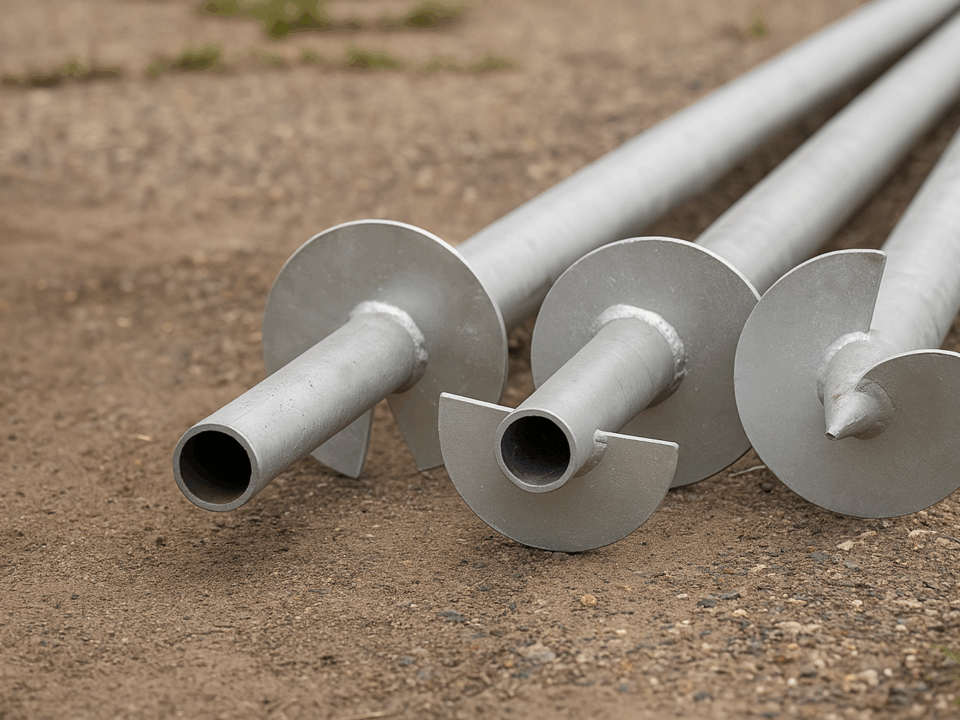
Helical piles are steel shafts with screw-like blades that twist deep into the ground using hydraulic machinery.
How They Work:
-
The helical “plates” grip stable soil layers far below the surface.
-
They provide both downward and lateral load capacity, making them storm-resistant.
-
Extensions can be added to reach required depths.
👉 Advantage: Perfect for Long Island’s soft, sandy soils that don’t hold traditional pilings well.
Head-to-Head Comparison
| Feature | Traditional Pilings | Helical Piles |
|---|---|---|
| Longevity | Timber: 15–25 yrs, Concrete: 30–40 yrs | 40+ years with minimal maintenance |
| Installation Method | Driven by heavy pile driver & barge | Installed with compact hydraulic equipment |
| Soil Compatibility | Weak in sandy soils, may shift | Anchors deep into stable sublayers |
| Storm Resistance | Moderate — prone to shifting during surges | Excellent — resists Nor’easters & hurricanes |
| Environmental Impact | Loud, disruptive, soil displacement | Quiet, minimal vibration, eco-friendly |
| Upfront Cost | Lower (especially timber) | Higher, but offset by long-term savings |
| Permitting | Standard, but stricter in erosion-prone areas | Typically easier due to lower environmental disruption |
The Case for Traditional Pilings
Despite their limitations, traditional pilings are still used across Long Island.
✅ Advantages
-
Lower upfront cost (especially timber).
-
Familiarity — contractors and inspectors are accustomed to them.
-
Effective in certain soil types and low-impact areas.
❌ Disadvantages
-
Timber rots, splits, and is vulnerable to marine borers.
-
Heavy installation equipment required (more disruption and cost).
-
Prone to shifting in sandy or eroding shorelines.
👉 Best For: Short-term builds, budget-conscious homeowners, or small docks in calm waters.
The Case for Helical Piles
Helical piles are fast becoming the preferred choice for Long Island marine construction.
✅ Advantages
-
Superior anchoring in sandy soils.
-
Withstand Long Island’s storms and sea-level rise.
-
Faster, quieter, and cleaner installation.
-
Longer lifespan with minimal maintenance.
❌ Disadvantages
-
Slightly higher upfront cost.
-
Requires specialized equipment and trained installers.
👉 Best For: Long-term waterfront investments, storm-prone areas, and properties where soil conditions are unstable.
Real-World Examples on Long Island
-
Massapequa Dock Build: Homeowner replaced timber pilings with helical piles after repeated storm damage. The dock has since survived three Nor’easters without shifting.
-
Babylon Bulkhead Replacement: Vinyl bulkhead reinforced with helical piles held strong during heavy storm surges, saving thousands in potential property damage.
-
Patchogue Marina: Commercial project required durability for high traffic — helical piles provided the strength needed without excessive disruption during installation.
Cost Comparison
-
Traditional Timber Pilings: $1,500–$2,500 per piling, 15–20 year lifespan.
-
Concrete/Steel Pilings: $2,500–$4,500 per piling, 30–40 year lifespan.
-
Helical Piles: $2,500–$3,500 per piling, 40+ year lifespan.
👉 While timber looks cheaper upfront, helical piles often save money long-term because they don’t need frequent replacement.
When to Choose Helical Piles vs. Traditional Pilings
Choose Traditional Pilings If:
-
You’re building a small dock in calm waters.
-
Budget is the primary concern.
-
You don’t plan to keep the property long-term.
Choose Helical Piles If:
-
You’re building in sandy soil (most of Long Island’s south shore).
-
Your property is storm-prone or erosion-exposed.
-
You want a long-lasting, low-maintenance solution.
-
You’re investing in a bulkhead, pier, or marina project.
Why RC Wish Marine Construction?
At RC Wish, we’ve spent decades building on Long Island’s unique waterfronts. We specialize in both traditional pilings and advanced helical pile installations, helping homeowners choose the best foundation for their needs.
-
✅ Licensed & Insured Marine Contractors
-
✅ Specialized Helical Pile Equipment
-
✅ Knowledge of Town, County, and NYS DEC Permitting
-
✅ Decades of Experience Across Nassau & Suffolk Counties
-
✅ 5-Star Reputation for Reliability and Durability
📍 259 S Bayview Ave, Amityville, NY 11701
📞 (631) 278-7146
👉 Request Your Free Helical Pile Quote Today »
Final Thoughts
Long Island’s waterfront environment is harsher than most — with sandy soils, strong storms, and constant boat traffic. While traditional pilings may work in some cases, helical piles are the smarter investment for long-term stability, safety, and peace of mind.
If you’re building or repairing a dock, pier, or bulkhead, don’t settle for outdated methods. Let RC Wish Marine Construction provide you with a foundation that lasts for generations.
📞 Call us at (631) 278-7146 or Request a Free Quote Online ».